
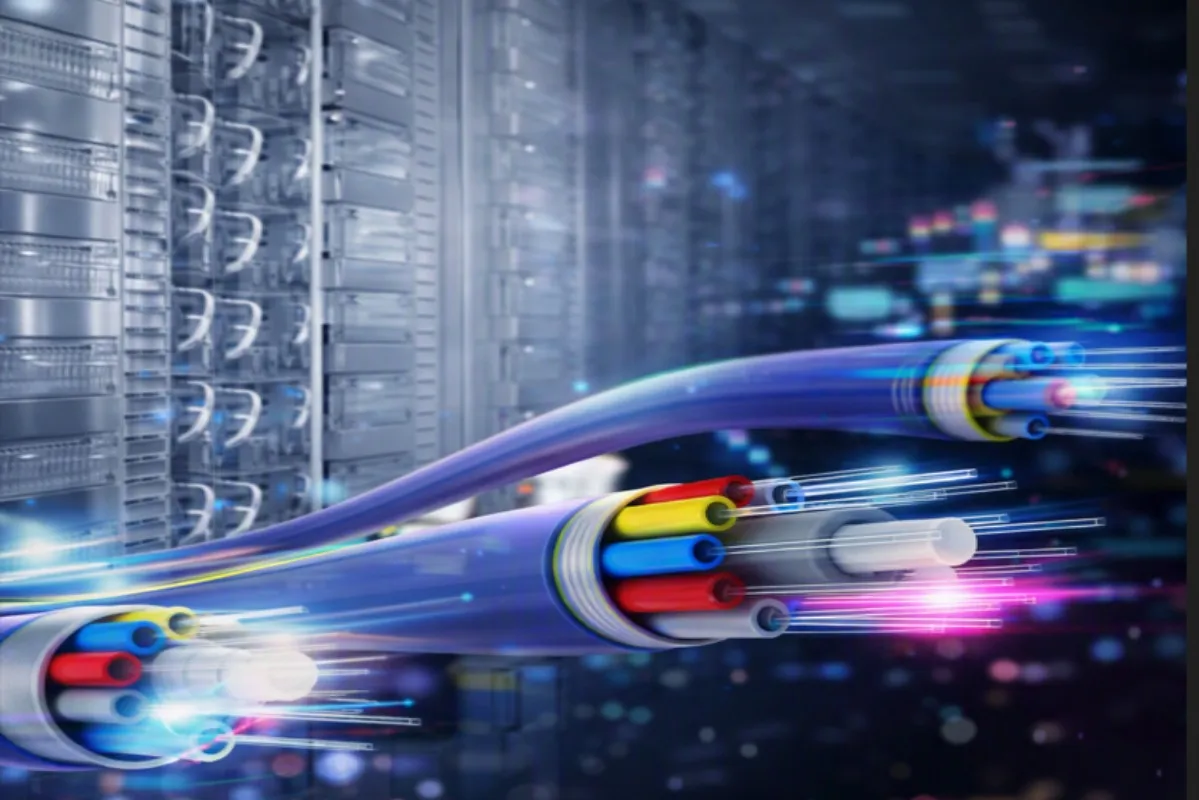
Best 5 Data Center Cable and Wire Stocks: How Indian Data Center cable and wire companies Rewiring the Cable Industry
When people talk about the data-center boom, the conversation usually starts with servers, GPUs, cooling systems, and the diesel gensets humming behind chain-link fences on the outskirts of every major Indian city. Cables rarely come up. That’s a mistake. Every rack, every campus, every substation feeding a hyperscale facility is wired together by kilometers of copper, aluminum and optical fiber — and as India’s data-center capacity heads toward several gigawatts by the end of the decade, the cable and wire industry is turning into one of the more interesting, underappreciated ways to play the buildout.
This is not a story about a single “data-center stock.” No Indian Data Center cable and wire companies breaks out data-center revenue as its own line item — a caveat worth keeping in mind before anyone gets too excited about a headline number. Rather, it’s a story about five listed data center cable stocks positioning capacity, product mix and capex around a demand cycle that management teams are now naming explicitly, on earnings calls and in annual reports, as a structural growth driver.
Table of Contents
Why Data Center Cable and Wire
A data center is, at its core, a reliability machine. Downtime is not an inconvenience — for a hyperscale cloud or AI facility, an hour of lost power can mean millions of dollars in disrupted compute. That obsession with redundancy cascades into cable demand: multiple parallel power feeds, extra-high-voltage (EHV) grid connections, medium-voltage distribution inside the campus, fire-survival and low-smoke-zero-halogen (LSZH) wiring for life-safety compliance, and dense structured cabling and optical fiber to keep racks talking at AI-era speeds.
Industry estimates suggest cables can account for 8–10% of total data-center construction spend, versus roughly 3% in a typical commercial building — and because AI workloads pack more power and network density per square foot than traditional cloud computing, that intensity is likely still rising. India’s data-center capacity, estimated at 1–2 gigawatts in the mid-2020s, is widely projected to multiply several times over by 2030 as hyperscalers, colocation operators and enterprise cloud providers race to build out capacity. That’s a multi-year tailwind that layers on top of — rather than competes with — India’s existing investment cycles in renewable energy, grid transmission, 5G and rural fiberisation.
You may be interested in “Best 5 Data Center Power Equipment Companies in India“
How Big Is the Data Center Cable and Wire Market?
India’s overall wires and cables market was valued at roughly ₹920 billion (~US$11 billion) in FY2024-25, and is projected to grow at a CAGR of nearly 12% to reach ₹1,430 billion by FY2028-29 — driven by infrastructure, urbanization, renewable energy and formalization of the unorganized sector. Globally, the wires and cables market is estimated at around US$202 billion, growing at a more modest 4.5% CAGR.
Data Center Cable and Wire market is a small but fast-growing slice of that pie. Estimates of India’s data-center capacity — KEI’s disclosures point to growth from roughly 0.35 GW in FY19 to over 8 GW by FY30 and 14 GW by 2035, while other companies in this space cite capacity reaching 1.7–2.3 GW by 2026-27 and 4-5 GW by 2030. Despite the spread, the direction is consistent: Data Center Cable and Wire market will witness a multi-fold growth over the next five to ten years, backed by tens of billions of dollars in hyperscaler and infrastructure investment.
One estimate puts the global Data Center Cable and Wire market at roughly US$12.2 billion in 2026, growing to nearly US$19 billion by 2032, while India’s Data Center Cable and Wire market specifically is projected to expand from about US$5.5 billion in 2025 to over US$13 billion by 2034 — implying the underlying demand pool for Data Center Cable and Wire manufacturers could more than double within a decade, even before accounting for AI-driven increases in cable intensity per facility.
Best 5 Data Center Cable and Wire Stocks
Five companies stand out for how directly they are positioning around this opportunity: Polycab India, KEI Industries, R R Kabel, APAR Industries and Finolex Cables.
Polycab India: Scale Meets the Sunrise Sector
Polycab is India’s largest wires and cables manufacturer, and by most measures the strongest all-round player on this list. Its Wires & Cables segment generated roughly ₹252 billion in FY26 — about 87% of total sales, up 33% year-on-year — alongside smaller FMEG and EPC businesses. The company runs 26 manufacturing plants, roughly six million kilometers of annual production capacity, and a distribution network reaching more than 190,000 retail touchpoints.
What sets Polycab apart is how explicitly it has institutionalized the opportunity. Under “Project Spring,” its FY26–FY30 strategic plan, data centers are one of five named “sunrise sectors” — alongside EVs, defence, renewables and electronics — with dedicated sector coverage. Management projects India’s data-center capacity rising from roughly 900–950 MW in FY24 to 2,000–2,300 MW by FY27, and cites that elevated 8–10% cable-content statistic. Polycab has also named an actual project — a Vodafone Idea data-center build involving Vertiv in Punjab — and separately won roughly ₹80 billion in BharatNet Phase III contracts, reinforcing its broader digital-infrastructure exposure.
FY26 capex hit ₹14.8 billion, the highest in company history, and Polycab has earmarked ₹60–80 billion over five years for further capacity, automation, backward integration and EHV capability — all funded internally, with near-zero debt. Consolidated FY26 revenue reached ₹288.8 billion, EBITDA ₹40.1 billion, and PAT ₹27.1 billion. Data centers remain a small slice of a very large pie here, but the scale, balance sheet and explicit strategic commitment make Polycab the safest way to buy into the theme.
KEI Industries: The EHV Angle
KEI Industries generates roughly 96% of its revenue from wires and cables, spanning EHV cables up to 400kV, HT/LT power cables, house wires and specialty products. Where KEI gets interesting is in framing data centers less as a cable-volume story and more as a power-infrastructure margin story.
The company lists “Telecom & Data Centers” among the industries it serves, and management has cited data centers repeatedly — in annual reports, investor presentations and earnings calls — as both a domestic demand driver and a target vertical for its US export push, alongside oil & gas. Third-party estimates referenced by KEI point to India’s data-center capacity multiplying nearly five-fold by FY30, with tens of thousands of crores of associated investment.
The real story, though, is Sanand — KEI’s ₹2,000 crore greenfield facility in Gujarat, where the LV/MV line is already operational and an EHV line is targeted for commissioning by March 2027. At full utilization, management expects Sanand to generate ₹6,000–7,000 crore of revenue, of which roughly ₹1,300 crore is EHV-specific.
That matters because EHV cables carry meaningfully higher margins — around 15%, versus 10.5–11% for standard LV/MV products — and EHV is precisely the category best suited to transmission infrastructure feeding power-hungry campuses. FY26 revenue was around ₹11,748 crore with PAT of ₹918 crore; Q1 FY27 revenue rose 23% year-on-year with PAT up around 40%. No single data-center contract has been disclosed, but explicit sector commentary, EHV capacity coming online, and a stated margin advantage make KEI arguably the highest-conviction structural play among the five.
R R Kabel: The Most Explicit Hyperscale Narrative
Of the five companies, R R Kabel gives data centers the most dedicated treatment — including a named sub-section on “Hyperscale Data Centres and the AI Build-Out.” Wires and cables make up about 90% of its revenue mix (₹8,764 crore in FY26, up 31%), with FMEG contributing the rest; the company crossed the USD 1 billion revenue milestone for the first time in FY26. This can be among dedicated Data Center cable and wire companies.
Management’s framing is unusually specific: India’s data-center capacity is projected to hit 1.7–2.0 GW by end-2026, backed by roughly USD 30 billion in investment, with hyperscaler commitments exceeding USD 126 billion — of which Microsoft, Amazon and Google alone account for about USD 67.5 billion. The company argues each gigawatt of capacity requires thousands of kilometers of high-density fiber, structured copper cabling and medium-voltage power feeds that “sit outside the traditional utility procurement cycle” and command premium specifications — a margin argument as much as a volume one.
R R Kabel has committed ₹1,200 crore to a modular, three-year capex plan, with the bulk aimed at cable — rather than wire or FMEG — capacity, alongside a push into fire-safety products (Firex, LSOH) well suited to mission-critical facilities. FY26 consolidated revenue reached ₹9,722 crore, EBITDA ₹770 crore and PAT ₹492 crore, with an exceptionally strong Q1 FY27: revenue up 54%, EBITDA up 99%, PAT up 129%. No named data-center customer has been disclosed, and ₹1,200 crore is modest next to the hyperscaler capex figures the company itself cites, but few peers write about the opportunity with this much conviction.
APAR Industries: Data Center Cable and Wire, Cooling Fluids in One Basket
APAR Industries is the outlier on this list, and arguably the most differentiated. It’s the world’s largest aluminium and alloy conductor manufacturer and the world’s third-largest transformer-oil maker, alongside a cable business that generated roughly ₹6,220 crore in FY26 — about 27% of its ₹22,902 crore consolidated revenue, and, notably, a segment that overtook Speciality Oils as APAR’s second-largest business for the first time this year.
What makes APAR’s exposure unusual is that it spans three separate businesses. In cables, the company targets data centers with elastomeric and specialty cables, plus fiber-optic, hybrid power-and-data, and LAN cables marketed for AI and 5G/6G buildouts — its telecom/OFC plant capacity has been scaled to over 200,000 cable-kilometers a year.
In its oils business, APAR has developed dedicated data-center cooling products — POWEROIL DTCC 25, a direct-to-chip coolant aligned with Open Compute Project guidelines, alongside immersion-cooling fluids DC 10 and DC 20 — exposure to rising rack power density that no pure cable manufacturer here can match. It has also secured 19 UL approvals across its cable range, a meaningful gate for supplying US hyperscaler and colocation projects.
Data Center cable and wire -segment capex hit ₹401 crore in FY26, up 115% year-on-year — the fastest-growing capex line across APAR’s three segments — and the cable order book stood at ₹1,925 crore as of Q1 FY27, with management noting rising US order inflow, though quarterly export growth has been lumpier than the roughly 50% pace cited for all of FY26. Consolidated FY26 revenue was ₹22,902 crore, EBITDA ₹2,067 crore, and PAT ₹977 crore. No named hyperscaler contract has been disclosed, but the multi-segment optionality — power cabling, connectivity, and now cooling fluids — is genuinely distinctive.
Finolex Cables: The Fiber Optionality in Data Center Cable and Wire Industry
Finolex Cables is India’s largest and most diversified manufacturer of electrical and telecommunication cables, but its data-center story runs through a smaller, quieter part of the business: Communication Cables, which contributes only around 9–10% of standalone revenue. The company’s annual report states plainly that global data-center growth is driving demand for optical fiber, data cables and power cables, and management names data-center expansion — alongside 5G and BharatNet — as a long-term driver for this segment.
The capacity story is the most tangible evidence here. Finolex has been scaling optical-fiber draw capacity from roughly four million kilometers toward eight million, and has commissioned a glass preform facility that makes it only India’s second self-reliant OFC preform manufacturer, cutting import dependence and improving margins.
More tellingly, its own segment-level capex disclosures show Communication Cables absorbed about 73% of total standalone capex in FY24 and roughly half in FY25 — a striking allocation for a segment generating barely a tenth of revenue, even accounting for the fact that this spend also serves 5G, BharatNet and defence, not data centers alone.
FY26 standalone revenue reached ₹6,321 crore with PAT of ₹623 crore, and Q1 FY27 revenue jumped 44% year-on-year with PAT up 59%, helped by a recovering global fiber-pricing environment. No data-center customer or order has been named, making this the least explicit disclosure among the five — but arguably the purest fiber-price-recovery bet if global data-center demand tightens fiber supply.
How these 5 listed data center cable stocks Performs
| Data Center cable and wire companies | Key DC Strength | Power Cable | Fiber/Data Cable | DC Disclosure | Overall Position |
| Polycab India | Scale + diversified portfolio | Strong | Strong | Explicit, named project | Best all-rounder |
| KEI Industries | EHV expansion + margin lever | Strong | Moderate | Explicit, sector-level | High-potential |
| R R Kabel | Hyperscale narrative + specialty cables | Moderate-strong | Strong | Very explicit | High-potential |
| APAR Industries | Cable + fiber + cooling fluids | Moderate-strong | Strong | Explicit, multi-segment | Most diversified |
| Finolex Cables | Fiber capacity + preform integration | Moderate | Strong | Least explicit | Fiber optionality |
Why This Opportunity for Indian data center cable manufacturers Could Run for Years
Three forces suggest this is closer to the start of a cycle than the end of one. First, AI workloads are far more power- and connectivity-intensive than traditional cloud computing, pushing up cable content per rack. Second, the opportunity extends beyond the walls of the data center itself — campuses need dedicated substations, EHV transmission connections and often direct renewable-energy feeds, which is why EHV-capable players like KEI and Polycab may capture a disproportionate share of total spend. Third, data centers are being built alongside 5G rollout, grid modernization, renewables and rural fiberisation — so exposed manufacturers are riding several overlapping investment cycles at once, not a single-sector bet.
The Bottom Line on best cable stocks for AI infrastructure boom
There is no single “best” way to play this theme, and investors should resist treating any of these five stocks as a pure data-center proxy — none discloses a standalone Data Center cable and wire revenue figure, and in every case the opportunity sits inside a far larger, more diversified cable business.
Polycab offers the safest blend of scale and balance-sheet strength with real strategic commitment. KEI offers the clearest margin-accretive angle through its EHV build-out at Sanand. R R Kabel brings the boldest narrative and a specialty-cable pivot tailored to hyperscale specifications. APAR offers the broadest optionality across cables, fiber and cooling fluids. Finolex offers a leveraged, if less explicit, bet on a potential global fiber-pricing recovery. however, if you want to keep an watch on listed data center cable stocks these are the best Data Center cable and wire companies.
The more useful exercise over the next several years isn’t picking a winner today, but tracking the signals that separate genuine data-center capture from wishful annual-report language: named order wins, EHV and fiber capacity utilization, mix-shift toward higher-margin specialty cables, export certifications, and — eventually — the first company willing to report data centers as a line of its own.
Disclaimers: This article on “Best 5 Data Center Cable and Wire Stocks” is for informational purposes only and does not constitute investment advice. Readers should conduct their own research or consult a financial advisor before making investment decisions.